>> write // chris trinidad's chroma tonic: liner notes
Chris Trinidad: bass guitar, synth bass
Alex Heigl: guitar, widescreen effects
Scott Oshiro: flute, quantum electronics
Cy Thompson: drum set, percussion
Produced and Mixed by Chris Trinidad at Elemental MusicWorks, Pinole, CA.
Recorded by Akiyoshi Ehara on 7 December 2025
at Wyldflowr Arts, Oakland, CA.
Mastered by Akiyoshi Ehara on 25 March 2026
at Sleepy Wizard Studios, El Cerrito, CA.
Layout and Design by Chris Stevenson.
Cover Artwork by Katie Quan.
Photos by Noah Rosen.
The Inspiration and This Album
Drawing inspiration from ambient music pioneers Brian Eno and Robert Fripp, the late sixties avant-garde space psychedelia of Pink Floyd, the progressive improvised electronic rock of King CrimsonÕs ProjeKcts series, the adventurous electric hybrid experimentations of early seventies Miles Davis, the aim of this group is to blend these explorations with the unique musical sensibilities of the players.
This album was recorded on the very first gig for this new project assembled to close out my Rootstock Arts three night residency which featured various projects of mine at Wyldflowr Arts in Oakland, CA. I assembled this band specifically for this occasion, and the success of the evening and the experience prompted me to continue cultivating possibilities for this powerful ensemble.
This album also completes a trilogy which includes 2025 Iridium Records live performance releases with The Shadow Band and Red Fast Triple Luck where groove experiments married with a kaleidoscope of sounds, and are framed by experimental, open, and free improvisation. Each of the releases were recorded in unique spaces: The Shadow Band in a place of healing called Restorative Justice for Oakland Youth, Red Fast Triple Luck in a bookstore called Medicine for Nightmares, and this album at Wyldflowr Arts, a community music space known for incubating unique projects.
The Players
The players in Chroma Tonic, as with other projects I have fomented in the past, come from different orbits within the eclectic and diverse music universe here in the San Francisco Bay Area.
Guitarist and bassist Alex Heigl was in the audience at Wyldflowr Arts where I was performing with other groups and projects. He also ran a monthly ambient music open improvisation session in the same space that I attended. We struck up several conversations about working together and this project became the perfect vehicle for him to launch us into the atmosphere!
As Alex shared, ÒIÕm doing as much as I can to not sound like a conventional guitar player in this band. I might fall back on some fingerpicking patterns, but when people tell me after a show ÔI couldnÕt tell where your sound was coming from,Õ I feel like IÕve done my job. I want the guitar textures to be like something you see out of the corner of your eye, but canÕt focus on it when you turn.Ó
I was introduced to flutist and music technology researcher Scott Oshiro by Asian American jazz legend Francis Wong. Francis and I featured Scott during our Directions in Music Making by Asian Americans (+1 Canadian!) 2024 residency at South San FranciscoÕs Sky Cafe. As an African and Okinawan American, his creative and academic work incorporates influences from his heritage and combines them with jazz, hip hop, and electronic music. ScottÕs ground breaking approach to combining quantum computing, culture, and improvisation is the right balance point to complement AlexÕs atmospherics. The quantum electronics you hear on this album, devised and programmed by Scott and triggered by his live flute playing, take us beyond the asteroid belt!
As Scott explained, ÒJazz improvisation shares many elements with quantum physics, with the principles of superposition, entanglement and interference acting as their fundamental building blocks. Recently, quantum computing technologies have emerged with the potential to help us further explore our physical world at the cosmological and subatomical levels. For this live album, quantum music generation systems and audio effects, simulating quantum tunneling and black hole dynamics were developed and integrated into the performance. Through performing and interacting with these systems, the band explores and interacts with infinite the possibilities of our past, present, and future, and how we are all entangled with one another in community in each possibility.Ó
Cy ThompsonÕs drumming is anchored by his deep knowledge of Afro-Cuban and Afro-Brazilian traditional rhythms. Cy is a member of Bater’a Batuki, a San Francisco Bay Area group featuring Brazilian percussion, dance, electronic melodic instruments, and vocals, performing a fusion of Latin music ranging from such backgrounds as Samba-Reggae, Afro-Caribbean, Hip Hop, and Funk. He also plays with ChangŸis—nico, a San Francisco Bay Area band exploring the traditional rhythms and repertoire of celebratory folk music from Guant‡namo, Cuba, known as ChangŸ’. CyÕs rhythmic propulsion was the right rocket fuel to get us to the outer limits of the solar system and back!
As Cy elucidated, ÒAs much as possible, IÕm trying to lead with my ears. With that, I feel like I am able to adapt to unexpected things, which is super important for this kind of collective, improvised music making. I still feel like I can lean on my stylistic influences, but am really enjoying exploring new ways to blend styles and make unexpected connections of influences based on what each musical moment might call for.Ó
The Artwork
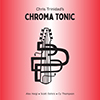
The artwork for the front cover was developed by Katie Quan. The genesis for the idea came from one of AlexÕs tattoos! Inspired by an image of Robert FluddÕs Music of the Spheres monochord, along with the headstock of my six string bass guitar, and mixed with some ideas drawn from Islamic geometric art I encountered in my recent travels to TŸrkiye, Katie was able to combine these into an abstract image that captured the multivalent nature of the music that this group created in the moment.
The Directions In Music
After a couple of initial rehearsals to check sounds and ideas, the players suggested that I provide some light guidelines that could help to set the trajectory for our music making together. As you will see, I had fun with the directions. It was up to each player to interpret or disregard them as they wished. Most importantly, dialoguing with one another through our sounds became the order of the day. The song titles are numbers in Tagalog, my first language.
Isa
Airy and washy. Sound bathing and floating in the cosmos. Ethereal with no pulses.
Dalawa
Chill and groovy. Minty flavours with a splash of low simmer.
Tatlo
Hints of Afro-Caribbean adjacent spices with pan-modal abstraction floating on top.
Apat
Intensity and energy. Forward direction and momentum. Freneticism meets fast bop.
Lima
Free and open. Collide and combine. Spacious and specious.
Anim
Palate cleanser. Reflective and pastoral. Yacht rock meets Mark Rothko.
Pito
Soothing repose and denouement. Contemplate the end of time with melancholy.
Acknowledgments
My appreciation goes to all who contributed to this project: Alex Heigl, Scott Oshiro, Cy Thompson, Akiyoshi Ehara, Chris Stevenson, Katie Quan, and Noah Rosen.
Special thanks to Sameer Gupta of Rootstock Arts and Nora Free from Wyldflowr Arts for providing artist forward support and space to incubate Chroma Tonic.
Extra special thanks to my wife and life partner Pia for always sticking by my side and walking alongside this creative journey with me.
Chris Trinidad
March 2026